Deepening Buyer-Seller Engagement with AI Agents - recap from a top session at SISO
Deepening Buyer-Seller Engagement with AI Agents - recap from a top session at SISO
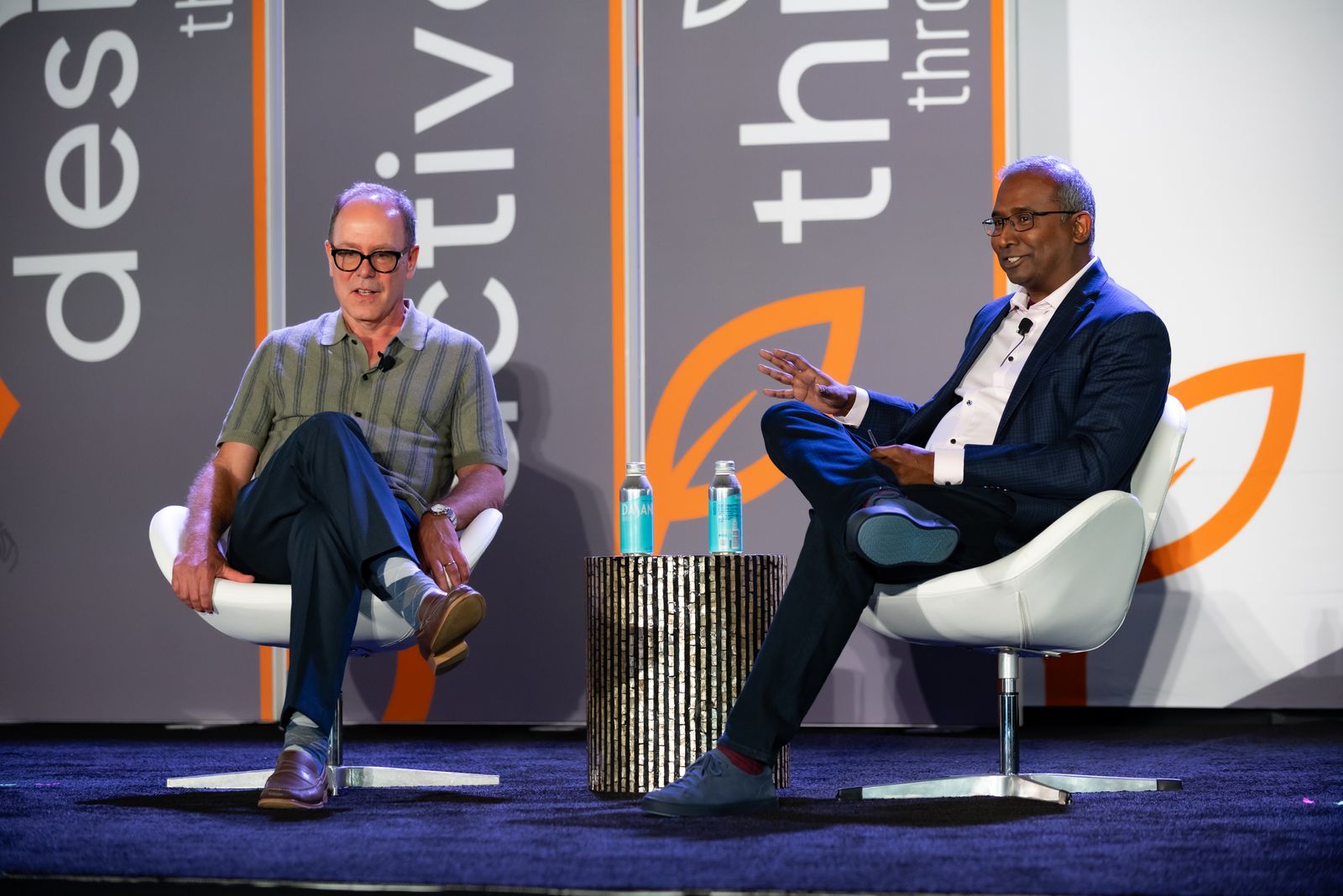
The integration of AI agents into the buyer-seller engagement process at hosted events within the home building industry has demonstrated significant potential. Here is the recap of an incredible session from SISO Leadership Conference in Seattle, WA.
Speakers
Max Gabriel · John Galante
Wednesday August 19th, 12pm PST
At this year's SISO Leadership Conference, Markus AI CEO Max Gabriel joined John Galante, President of AE Ventures, to share how AI agents are reshaping buyer-seller engagement at hosted events.
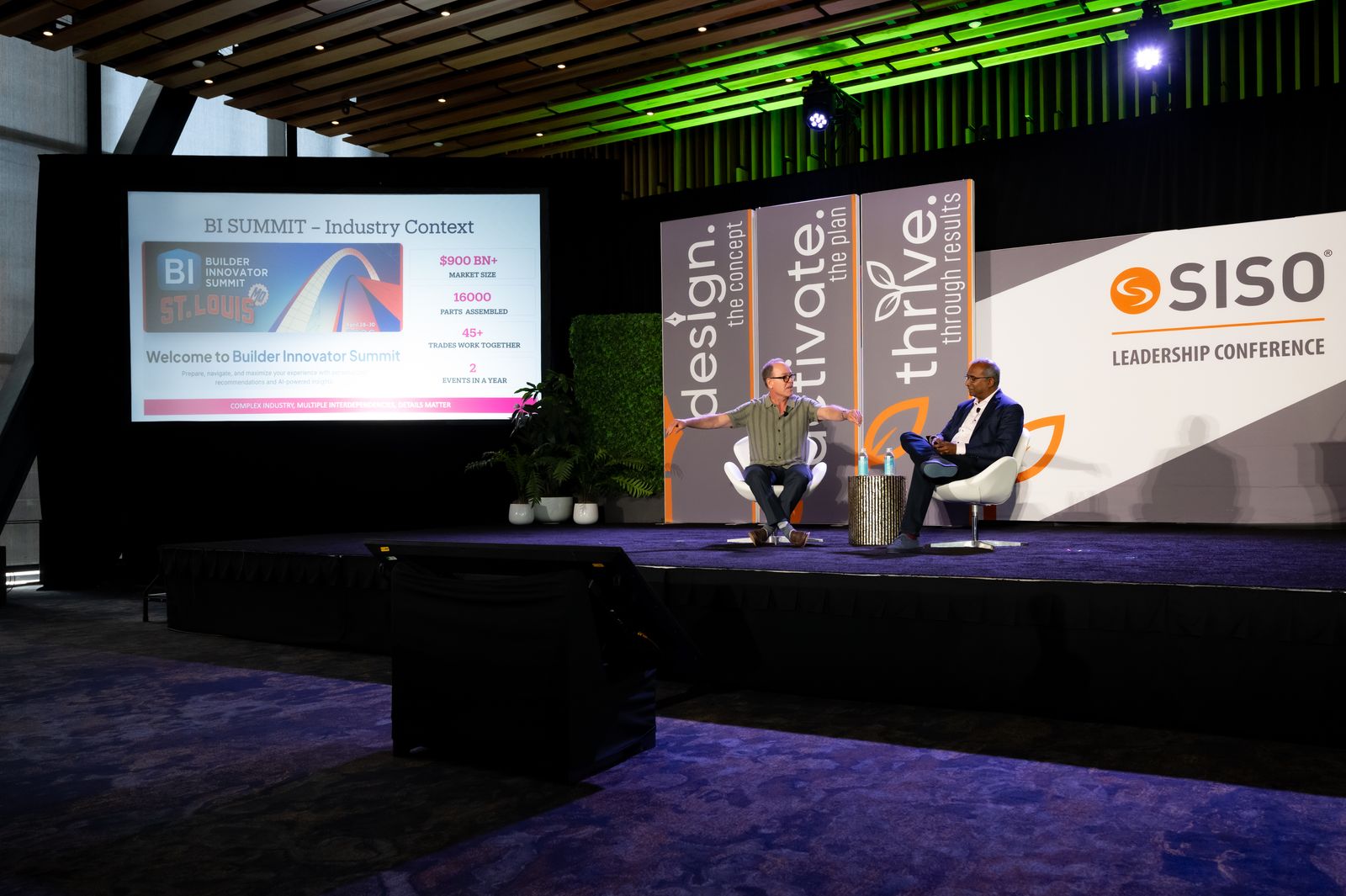
Here's a look at what they covered.
The integration of AI agents into the buyer-seller engagement process at hosted events within the home building industry has demonstrated significant potential to enhance the efficiency and effectiveness of connections between buyers and sellers. By leveraging AI for pre-event preparation, real-time meeting note capture, and post-event follow-up, Builder Innovator has pioneered a transformative approach that addresses the complexity of a trillion-dollar industry involving thousands of parts and trades. The pilot implementation revealed that AI-driven personalized interviews captured attendees' goals with a 70% participation rate, while AI-assisted note-taking and action tracking during meetings facilitated deeper engagement and more actionable outcomes. The success of early adopters, such as a luxury custom builder who reported a tenfold increase in engagement effectiveness, underscores the value of designing solutions for highly engaged users to drive broader adoption. Furthermore, the use of AI for deep account research and personalized communication has enabled more targeted and meaningful interactions, setting a new standard for event-driven business development. This approach not only improves immediate event outcomes but also fosters sustained post-event collaboration, positioning AI as a critical enabler for innovation in complex B2B environments.
A trillion-dollar industry with a coordination problem
Home building is a nearly $1 trillion market, but the way it runs day to day looks nothing like its size. Forty-five trades and 16,000 parts have to line up on every project, and most of that coordination still happens through fragmented relationships built at trade shows and industry events. At this year's SISO Leadership Conference session, Max Gabriel, Co-Founder and CEO of Markus AI, and John Galante, President of AE Ventures and publisher of BuilderInnovator.com, laid out how Builder Innovator set out to fix that problem, not with a bigger show floor, but with a smarter one.
Galante didn't mince words about the industry standard they were replacing:
"The average trade show engagement is 8 minutes, and half of that time is spent figuring out who's in front of whom."
The Builder Innovator model flips that ratio. Instead of a few rushed minutes navigating a crowded floor, hosted meetings now run 15 to 20 minutes, and every participant already knows who they're meeting and why.
Capturing intent before the event even starts
The first shift is in how goals get captured. Rather than relying on registration forms and guesswork, Markus AI's conversational agents conduct one-on-one interviews with attendees and sponsors ahead of the event to surface what they actually want to walk away with.
Gabriel framed the shift simply:
"What if you could actually ask attendees one-on-one using AI agents what they want to get out of the show rather than guessing and assuming based on registration?"
The results speak for themselves. The pilot hit a 70% participation rate in these pre-event interviews and generated more than 1,500 clearly defined objectives. That's 1,500 data points an organizer or exhibitor can act on instead of a stack of registration forms that mostly say the same thing.
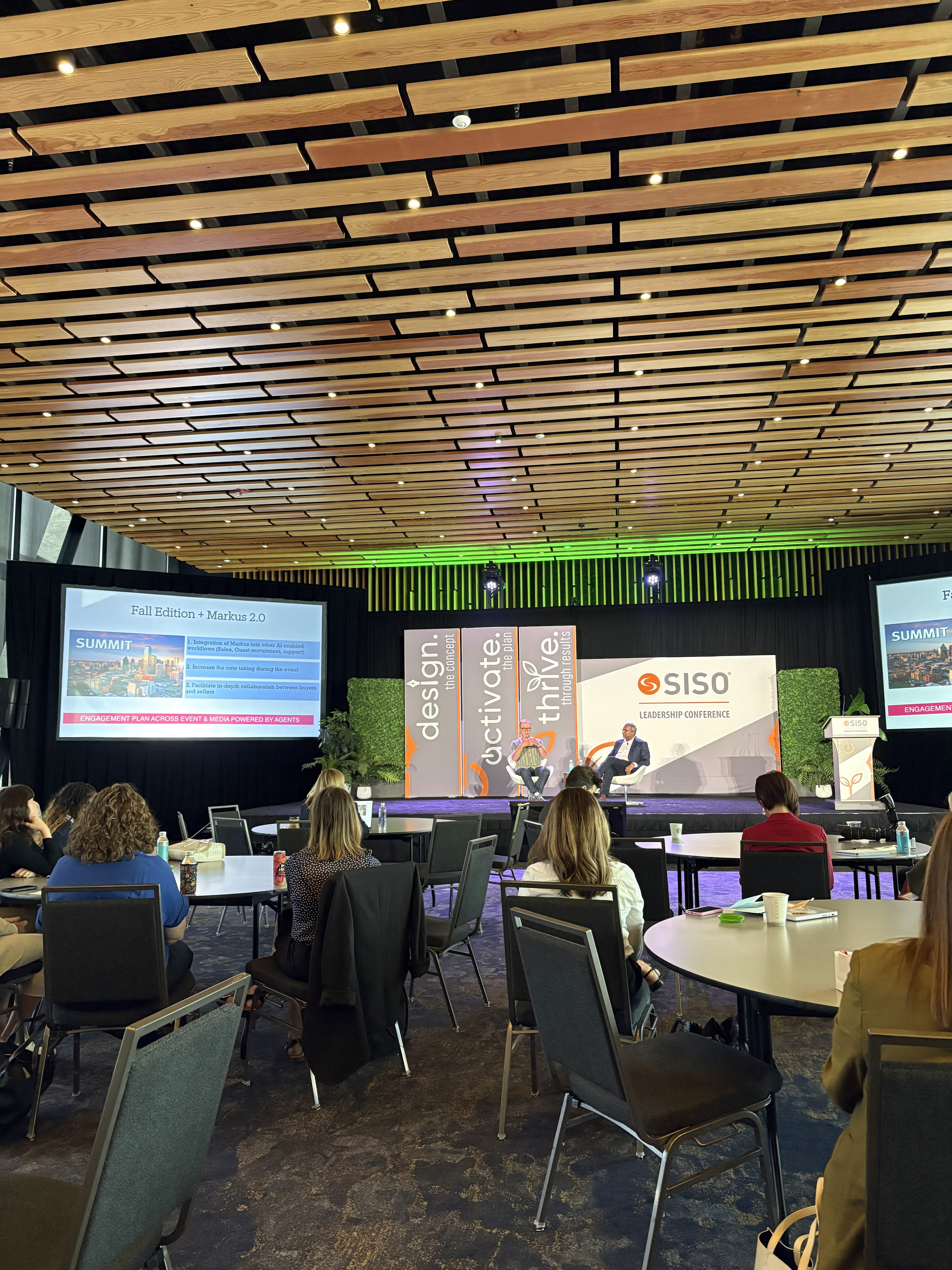
Where the real value gets lost, and how to keep it
Galante made the case that the most important part of any event isn't the meeting itself, it's what happens because of it.
"It's not just about what happens at the event. It's about what happens after. And most of the user error of events comes after. There's poor follow through. There's poor follow-up. They don't drive real opportunities."
That's the gap Markus Journey and the "event rapport" concept were built to close. AI-powered note capture runs during meetings, distilling conversations into clear, actionable next steps in real time. Across the pilot, this generated over 1,600 actionable insights, turning what used to be a mental note or a business card in someone's pocket into a documented, trackable action.
Galante put the underlying stakes plainly:
"The most valuable thing that happens at the event is the conversation, and that is not captured, it gets lost."
The post-event summary itself, inspired by the now-familiar Spotify Wrapped format, gives attendees and sponsors a comprehensive recap of their event designed to drive sustained engagement long after the doors close.
The power user case study: Drew
One theme ran through the entire session: design for your most engaged users, not the lowest common denominator. The team pointed to "Drew," a luxury custom builder who became their proof point. Drew generated over 200 actionable items from the event and achieved ten times the average engagement of other participants.
"We designed for Drew, our power user, because they're going to get disproportionate value out of this, and that's what's going to make this successful."
That's not just a nice anecdote, it's a product philosophy. Building for the power users first creates a standard the rest of the user base grows into, and it gives organizers a concrete example of what's possible when the tools are actually used to their full potential.
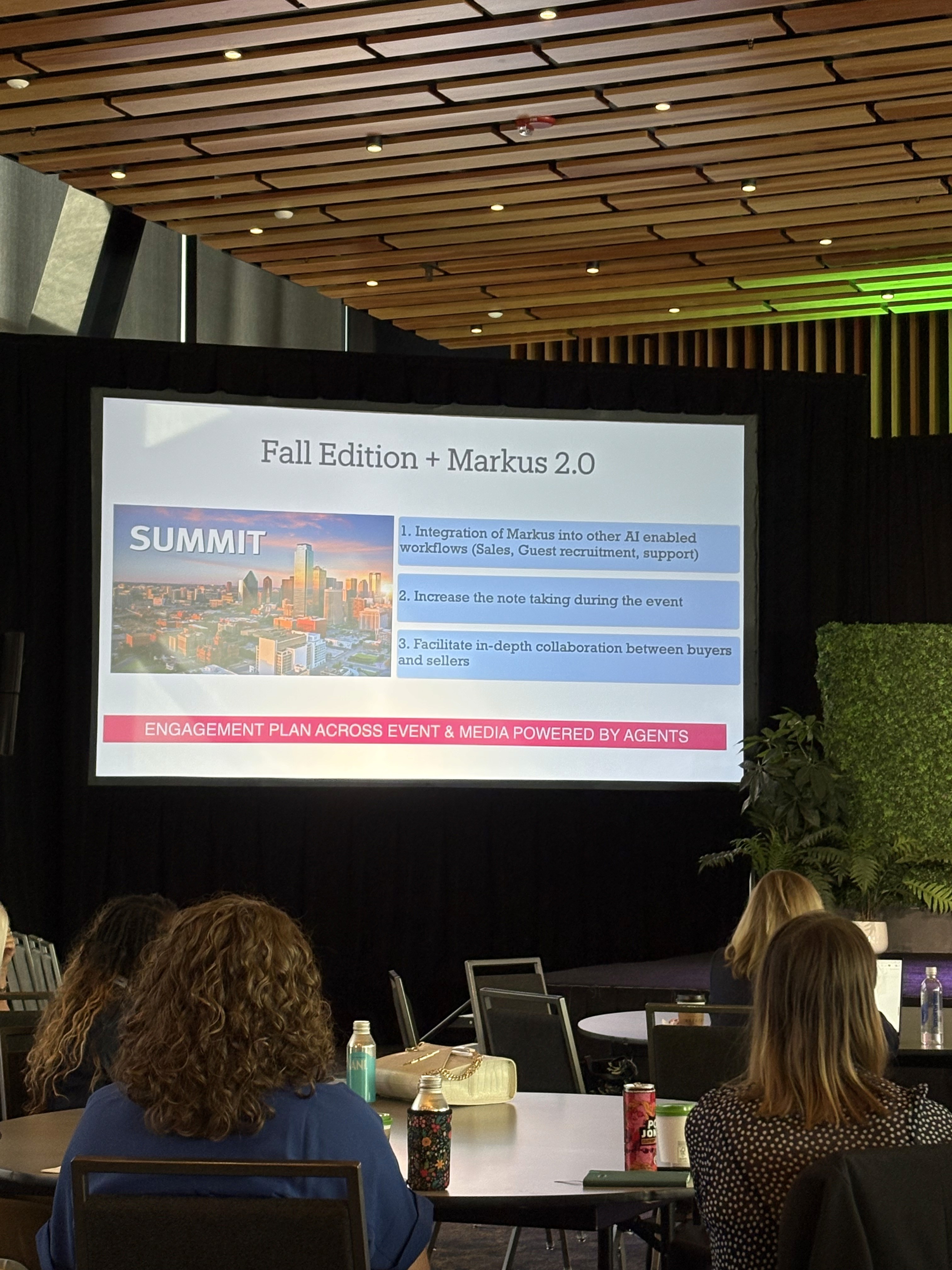
Adoption is a culture problem, not a tools problem
Both speakers were candid that the technology only works if people actually use it. Galante's advice for driving adoption was direct:
"If people don't play with AI tools, treating them like traditional IT tasks, they're not going to have their hair on fire like I do. You have to encourage them to play and ask big questions."
Gabriel connected that same mindset back to how Markus AI operates internally, describing how AI tools like Claude, combined with the team's own proprietary approach, have changed the sales process itself:
"Since we started using Claude, we can do deep account research on both the audience and sponsor side, creating better connections and more intelligent targeting."
He added that a capability the industry has wanted for years is now finally within reach:
"Verticalized, personalized campaigning using AI has been a dream for years, and now it can be done in minutes with quality control checks."
The bigger picture
Galante closed with a line that captured the urgency behind the whole session:
"This is transformational. This is an age, an epoch. If we don't become strong users of this technology, we are going to be left behind."
And on the discipline it takes to see results through, he offered a metaphor that stuck:
"You can bring a horse to water, but you can't make him drink. Salt the hay means you still own that problem. You may be frustrated, but you don't give up on it."
The session made a clear case: AI agents aren't replacing the relationship-building that makes events valuable, they're removing the friction that keeps those relationships from turning into real business outcomes. From pre-event goal capture to in-meeting note-taking to post-event follow-up, the Builder Innovator pilot showed what happens when every stage of the event lifecycle is built around what people actually came there to do.
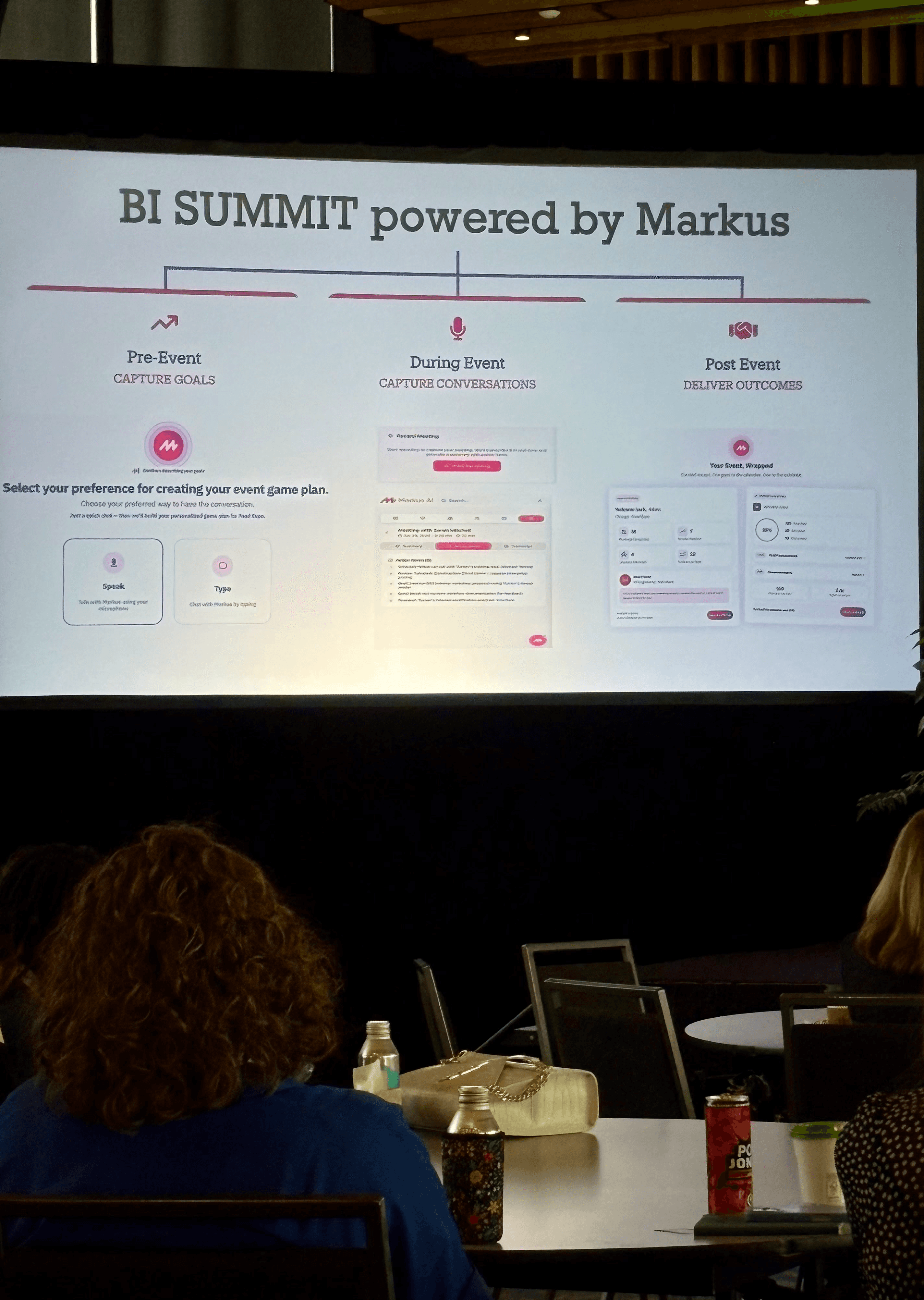
Go view the full session and explore the rest of the program at the SISO Leadership Conference 2026.
For more, connect with the speakers: John Galante and Max Gabriel on LinkedIn.
The session sparked interest in the Markus AI platform and the concept of the Wrapped Report was of interest to many of these event producers. You can read more about these features here.
The integration of AI agents into the buyer-seller engagement process at hosted events within the home building industry has demonstrated significant potential. Here is the recap of an incredible session from SISO Leadership Conference in Seattle, WA.
Speakers
Max Gabriel · John Galante
Wednesday August 19th, 12pm PST
At this year's SISO Leadership Conference, Markus AI CEO Max Gabriel joined John Galante, President of AE Ventures, to share how AI agents are reshaping buyer-seller engagement at hosted events.
Here's a look at what they covered.
The integration of AI agents into the buyer-seller engagement process at hosted events within the home building industry has demonstrated significant potential to enhance the efficiency and effectiveness of connections between buyers and sellers. By leveraging AI for pre-event preparation, real-time meeting note capture, and post-event follow-up, Builder Innovator has pioneered a transformative approach that addresses the complexity of a trillion-dollar industry involving thousands of parts and trades. The pilot implementation revealed that AI-driven personalized interviews captured attendees' goals with a 70% participation rate, while AI-assisted note-taking and action tracking during meetings facilitated deeper engagement and more actionable outcomes. The success of early adopters, such as a luxury custom builder who reported a tenfold increase in engagement effectiveness, underscores the value of designing solutions for highly engaged users to drive broader adoption. Furthermore, the use of AI for deep account research and personalized communication has enabled more targeted and meaningful interactions, setting a new standard for event-driven business development. This approach not only improves immediate event outcomes but also fosters sustained post-event collaboration, positioning AI as a critical enabler for innovation in complex B2B environments.
A trillion-dollar industry with a coordination problem
Home building is a nearly $1 trillion market, but the way it runs day to day looks nothing like its size. Forty-five trades and 16,000 parts have to line up on every project, and most of that coordination still happens through fragmented relationships built at trade shows and industry events. At this year's SISO Leadership Conference session, Max Gabriel, Co-Founder and CEO of Markus AI, and John Galante, President of AE Ventures and publisher of BuilderInnovator.com, laid out how Builder Innovator set out to fix that problem, not with a bigger show floor, but with a smarter one.
Galante didn't mince words about the industry standard they were replacing:
"The average trade show engagement is 8 minutes, and half of that time is spent figuring out who's in front of whom."
The Builder Innovator model flips that ratio. Instead of a few rushed minutes navigating a crowded floor, hosted meetings now run 15 to 20 minutes, and every participant already knows who they're meeting and why.
Capturing intent before the event even starts
The first shift is in how goals get captured. Rather than relying on registration forms and guesswork, Markus AI's conversational agents conduct one-on-one interviews with attendees and sponsors ahead of the event to surface what they actually want to walk away with.
Gabriel framed the shift simply:
"What if you could actually ask attendees one-on-one using AI agents what they want to get out of the show rather than guessing and assuming based on registration?"
The results speak for themselves. The pilot hit a 70% participation rate in these pre-event interviews and generated more than 1,500 clearly defined objectives. That's 1,500 data points an organizer or exhibitor can act on instead of a stack of registration forms that mostly say the same thing.
Where the real value gets lost, and how to keep it
Galante made the case that the most important part of any event isn't the meeting itself, it's what happens because of it.
"It's not just about what happens at the event. It's about what happens after. And most of the user error of events comes after. There's poor follow through. There's poor follow-up. They don't drive real opportunities."
That's the gap Markus Journey and the "event rapport" concept were built to close. AI-powered note capture runs during meetings, distilling conversations into clear, actionable next steps in real time. Across the pilot, this generated over 1,600 actionable insights, turning what used to be a mental note or a business card in someone's pocket into a documented, trackable action.
Galante put the underlying stakes plainly:
"The most valuable thing that happens at the event is the conversation, and that is not captured, it gets lost."
The post-event summary itself, inspired by the now-familiar Spotify Wrapped format, gives attendees and sponsors a comprehensive recap of their event designed to drive sustained engagement long after the doors close.
The power user case study: Drew
One theme ran through the entire session: design for your most engaged users, not the lowest common denominator. The team pointed to "Drew," a luxury custom builder who became their proof point. Drew generated over 200 actionable items from the event and achieved ten times the average engagement of other participants.
"We designed for Drew, our power user, because they're going to get disproportionate value out of this, and that's what's going to make this successful."
That's not just a nice anecdote, it's a product philosophy. Building for the power users first creates a standard the rest of the user base grows into, and it gives organizers a concrete example of what's possible when the tools are actually used to their full potential.
Adoption is a culture problem, not a tools problem
Both speakers were candid that the technology only works if people actually use it. Galante's advice for driving adoption was direct:
"If people don't play with AI tools, treating them like traditional IT tasks, they're not going to have their hair on fire like I do. You have to encourage them to play and ask big questions."
Gabriel connected that same mindset back to how Markus AI operates internally, describing how AI tools like Claude, combined with the team's own proprietary approach, have changed the sales process itself:
"Since we started using Claude, we can do deep account research on both the audience and sponsor side, creating better connections and more intelligent targeting."
He added that a capability the industry has wanted for years is now finally within reach:
"Verticalized, personalized campaigning using AI has been a dream for years, and now it can be done in minutes with quality control checks."
The bigger picture
Galante closed with a line that captured the urgency behind the whole session:
"This is transformational. This is an age, an epoch. If we don't become strong users of this technology, we are going to be left behind."
And on the discipline it takes to see results through, he offered a metaphor that stuck:
"You can bring a horse to water, but you can't make him drink. Salt the hay means you still own that problem. You may be frustrated, but you don't give up on it."
The session made a clear case: AI agents aren't replacing the relationship-building that makes events valuable, they're removing the friction that keeps those relationships from turning into real business outcomes. From pre-event goal capture to in-meeting note-taking to post-event follow-up, the Builder Innovator pilot showed what happens when every stage of the event lifecycle is built around what people actually came there to do.
Go view the full session and explore the rest of the program at the SISO Leadership Conference 2026.
For more, connect with the speakers: John Galante and Max Gabriel on LinkedIn.
The session sparked interest in the Markus AI platform and the concept of the Wrapped Report was of interest to many of these event producers. You can read more about these features here.
Previous Article
Previous Article
Next article
Next article